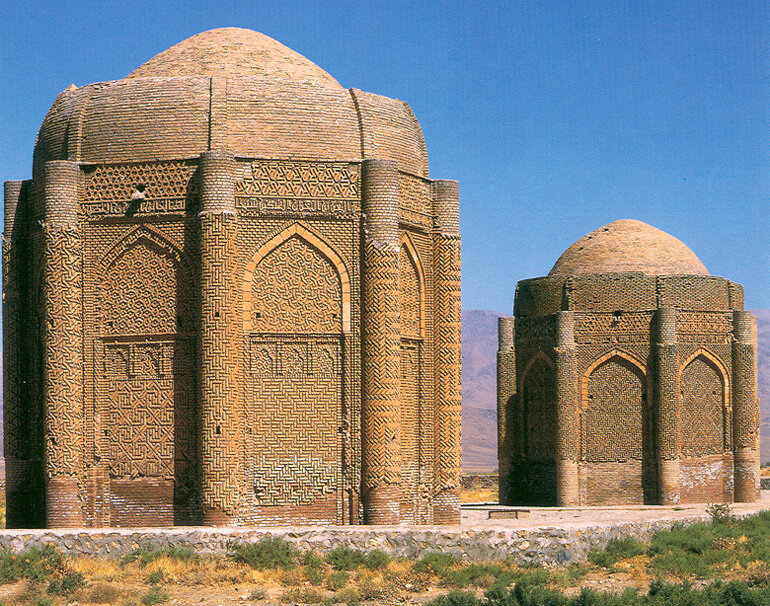
Seljuk Architecture: A Turning Point in the Evolution of Islamic and Iranian Architecture
Abstract
Seljuk architecture is one of the most significant periods in the history of Iranian and Islamic architecture, profoundly influencing later architectural styles. Flourishing from the 11th to the 13th centuries, this style combined Iranian architectural traditions with Islamic innovations, manifesting in various structures such as mosques, madrasas, caravanserais, mausoleums, and bridges. Key features of this period include the four-iwan plan, double-shell domes, muqarnas ornamentation, geometric brickwork, tilework, and calligraphic inscriptions. This article examines the historical background, architectural characteristics, and notable structures of Seljuk architecture while analyzing its impact on subsequent architectural developments.
1. Introduction
Architecture, as a fundamental aspect of civilization, has undergone significant transformations throughout history. After the advent of Islam, Iranian architecture, while preserving certain Sassanid characteristics, embarked on a new path that culminated in the Seljuk period. This era is considered one of the most influential in Islamic architectural history, as the expansion of the Seljuk Empire led to the dissemination of this style to neighboring regions such as Anatolia and Central Asia.
Seljuk architecture underwent significant transformations due to governmental patronage, advancements in construction techniques, and the establishment of religious and educational centers. One of the most notable innovations of this period was the introduction of the four-iwan plan in mosques and madrasas, a feature that persisted in Islamic architecture for centuries.
This article first examines the historical and cultural background of Seljuk architecture, then analyzes its structural, decorative, and technical features, and finally evaluates its influence on later architectural periods.
2. Historical Background and Cultural Context
2.1. The Historical Context of the Seljuks
The Seljuks, originally a Turkic tribe from Central Asia, rose to power in the 11th century CE (5th century AH) by defeating the Ghaznavids and establishing a vast empire across Iran, the Middle East, and Anatolia. By embracing Islam and supporting science and art, they ushered in one of the golden ages of Islamic civilization.
2.2. Influencing Factors in Seljuk Architecture
1. Governmental Patronage: Prominent viziers like Nizam al-Mulk played a crucial role in the development of educational and religious institutions such as the Nizamiyya madrasas.
2. Cultural Transformations: The fusion of Iranian artistic and architectural traditions with Islamic elements created a unique Seljuk style.
3. Advancements in Construction Technology: Innovations such as double-shell domes, muqarnas, and glazed tilework contributed to the structural integrity and aesthetic appeal of buildings.
3. Characteristics of Seljuk Architecture
3.1. Spatial Organization and Plans
One of the most significant developments in Seljuk architecture was the shift from hypostyle mosque plans to the four-iwan plan, creating a more centralized and hierarchical spatial organization.
• Four-Iwan Mosques: Featuring four iwans surrounding a central courtyard, as seen in the Jameh Mosque of Isfahan.
• Symmetry and Centrality: Seljuk architecture emphasized geometric precision and balanced compositions.
3.2. Materials and Construction Techniques
• Brickwork: Brick was the primary building material, used structurally and decoratively.
• Double-Shell Domes: Reduced structural weight and enhanced durability.
• Glazed Tilework: Introduced during the Seljuk period and later perfected in Timurid and Safavid architecture.
3.3. Ornamentation and Aesthetic Elements
• Muqarnas Vaulting: Created intricate geometric patterns in ceilings and iwans.
• Calligraphic Inscriptions: Often in Kufic and Thuluth scripts, adorning facades and interiors.
• Geometric and Floral Motifs: Used in brickwork and tilework to enhance visual appeal.
4. Notable Seljuk Architectural Monuments
4.1. Mosques
• Jameh Mosque of Isfahan: A prime example of the transition to the four-iwan plan.
• Jameh Mosque of Zavareh: Notable for its innovative use of brickwork and muqarnas.
4.2. Nizamiyya Madrasas
• Nizamiyya of Baghdad and Nishapur: Leading educational institutions that influenced later Islamic schools.
4.3. Mausoleums and Tombs
• Dome of Soltaniyeh: The largest brick dome in the world, considered a masterpiece of Persian-Islamic architecture.
• Mausoleum of Khwaja Abdullah Ansari: Featuring exquisite tilework and a sophisticated domed structure.
5. The Influence of Seljuk Architecture on Later Periods
Seljuk architecture left a profound impact on subsequent architectural styles:
• Ilkhanid Period: Continued use of the four-iwan plan and muqarnas in buildings like the Jameh Mosque of Varamin.
• Timurid Period: Expansion of decorative tilework inspired by Seljuk precedents, evident in structures such as the Goharshad Mosque.
• Safavid Period: Adaptation of Seljuk architectural principles in grand mosques and palaces, such as the Sheikh Lotfollah Mosque in Isfahan.
6. Conclusion
Seljuk architecture represents a defining era in Iranian and Islamic architectural history, characterized by innovations in spatial planning, structural techniques, and ornamental design. Notable features such as the four-iwan plan, geometric brickwork, muqarnas vaulting, double-shell domes, and calligraphic inscriptions had a lasting influence on later Islamic architecture. The legacy of this architectural style endured through the Ilkhanid, Timurid, and Safavid periods and continues to be an integral part of traditional Persian and Islamic architecture today.
References
• Blair, S. & Bloom, J. (1995). The Art and Architecture of Islam: 1250-1800. Yale University Press.
• O’Kane, B. (1997). Studies in Persian Art and Architecture. The American University in Cairo Press.
• Hillenbrand, R. (1994). Islamic Architecture: Form, Function, and Meaning. Edinburgh University Press.
Farzad Jalali Mosallam
MAR-2025
دیدگاهها
هیچ نظری هنوز ثبت نشده است.