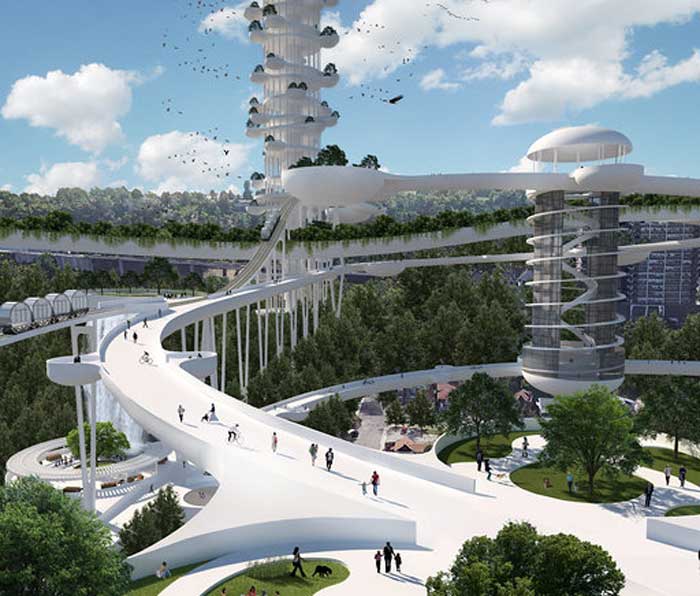
Future Architecture: Buildings That Breathe, Move, and Think
Introduction
The world of architecture is undergoing a radical transformation. In the past, buildings were static, lifeless structures meant only for shelter. Today, advancements in technology and biological sciences have paved the way for buildings that breathe, interact with their surroundings, adapt to environmental changes, and even make intelligent decisions. This article explores how cutting-edge technology is merging with architecture to create adaptable, sustainable, and intelligent structures.
1. Living Architecture: Buildings That Breathe
The buildings of the future will function more like living organisms. The use of bio-materials in construction, such as self-healing concrete, algae-infused facades, and breathable walls, is making this a reality. For example, the BIQ House in Hamburg, Germany, utilizes algae panels to purify the air and generate energy. Such buildings can automatically adapt to environmental changes while reducing their ecological footprint.
2. Adaptive Architecture: Buildings That Move
Imagine buildings that can change their form rather than remaining static. Innovations like the Al Bahr Towers in Abu Dhabi, whose responsive facades adjust to sunlight, showcase this concept. Additionally, mobile villas that can relocate based on environmental conditions promise a new era of adaptable architecture, ensuring energy efficiency and comfort in varying climates.
3. Intelligent Architecture: Buildings That Think
Artificial intelligence is playing a pivotal role in modern architecture. AI-driven buildings can analyze occupant behavior and adjust internal conditions accordingly. Smart homes that regulate indoor temperature, open and close blinds automatically, and optimize energy consumption are prime examples of this intelligent architecture.
4. The Fusion of Nature and Technology in Future Architecture
A significant trend in future architecture is the integration of nature-inspired design with advanced technology. Biophilic architecture, which fosters a deep connection between humans and nature through the use of natural elements, is gaining momentum. Additionally, innovations like 3D printing, self-repairing materials, and robotic builders allow architects to create structures that are both sustainable and efficient.
Conclusion
The future of architecture is taking shape—one where buildings are no longer just passive shelters but active, intelligent, and adaptable entities that interact with their surroundings. These advancements promise a more sustainable and smart world where buildings function as living, breathing parts of an ecosystem.
References
Smith, J. (2023). Biophilic Design and Sustainable Architecture. New York: Architecture Press.
Brown, L. (2022). Smart Buildings: The Future of Architecture. London: Future Tech Publishers.
Green, R. (2021). Adaptive Architecture and Climate Change. Amsterdam: EcoBuild Publications.
Farzad Jalali Mosallam
NOV-2025
دیدگاهها (۲)
سینا شاهی
۱۷ اسفند ۰۳ ، ۲۰:۳۳
میشه از این مقاله استفاده کرذ؟
پاسخ:
۱۸ تیر ۰۴، ۲۰:۵۱
sara
۱۸ اسفند ۰۳ ، ۲۳:۳۹
chand sal tool mikeshe