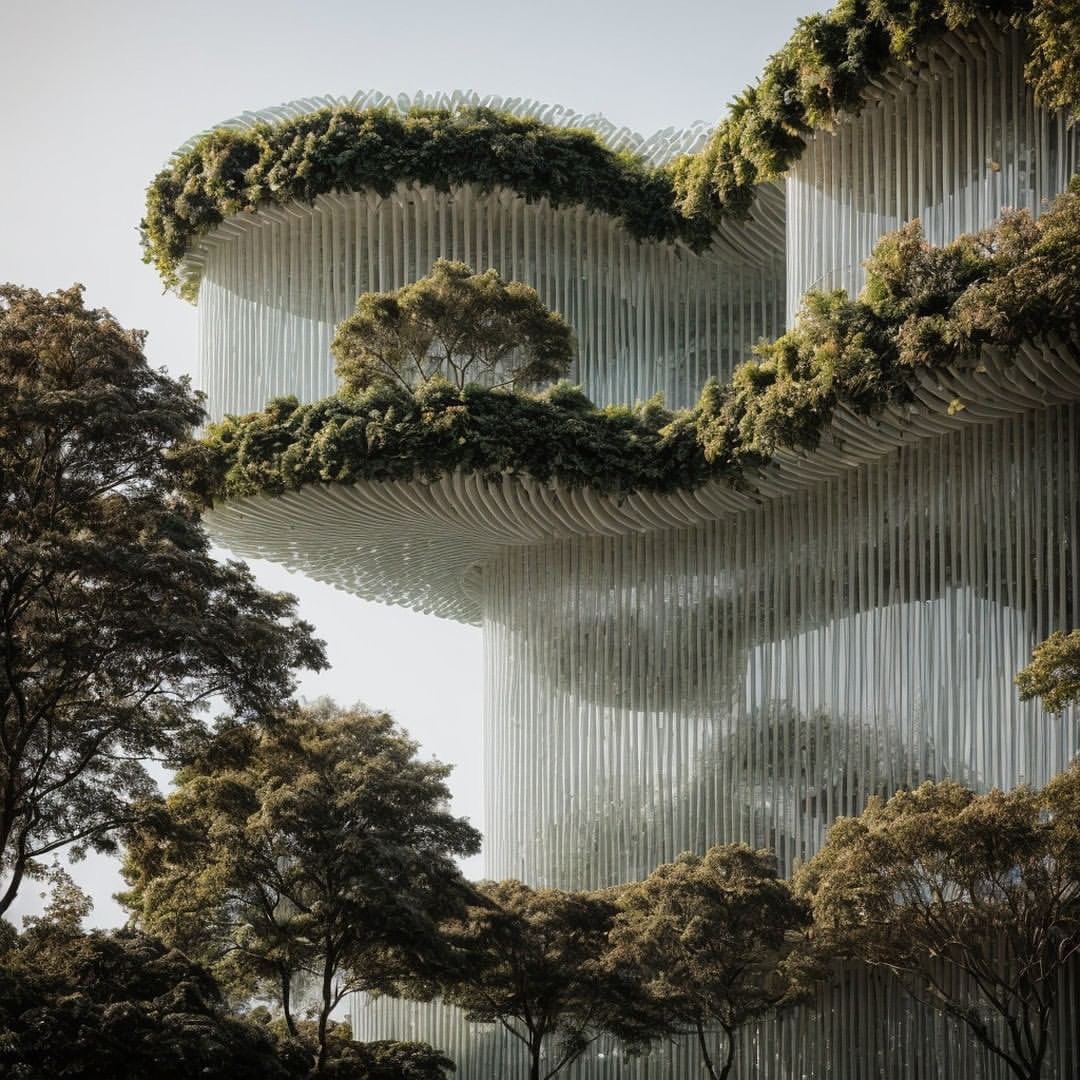
Artificial Intelligence in Architecture: From Human Collaboration to Independent Design and a New Future
Introduction
Artificial Intelligence (AI) has rapidly become one of the most influential technological advancements of recent decades. With applications spanning across various industries such as healthcare, manufacturing, transportation, and even art and architecture, AI is revolutionizing how we think about problem-solving, design, and creation. In its essence, AI refers to machines and systems capable of performing tasks typically requiring human intelligence, such as learning, reasoning, decision-making, and solving complex problems.
In architecture, AI is transforming the way buildings are designed and constructed. While it still relies on human input, AI has shown remarkable potential in enhancing the efficiency of design processes, optimizing building performance, and offering innovative solutions to complex architectural challenges. This article explores the role of AI in architecture, the challenges it faces, and how it may evolve to function independently, with no human intervention, in the future. Additionally, it will look at the future trajectory of AI in architectural design and examine how long it will take for AI to reach a point where it can completely take over the design process.
AI in Architecture: Understanding Its Applications
AI has the potential to revolutionize architectural design in numerous ways. By assisting architects in various phases of the design process, from conceptualization to construction, AI technologies can help improve efficiency, reduce human errors, and even generate new design possibilities. Some of the most notable applications of AI in architecture include:
• Generative Design: AI can create design solutions by analyzing multiple design parameters and generating a variety of design alternatives. Through generative design, AI uses algorithms to create optimized solutions for space utilization, structural integrity, and material efficiency. The design choices are then evaluated based on specific criteria, and the most effective designs are selected.
• Performance Analysis and Simulation: AI can analyze large datasets to predict building performance under various conditions. These conditions may include different weather patterns, energy consumption, and structural loads. AI-driven simulations can help architects make more informed decisions and create designs that perform optimally in terms of energy efficiency, sustainability, and user comfort.
• Energy Efficiency Optimization: AI-powered tools can simulate the energy performance of buildings, helping architects design structures that maximize energy efficiency. By analyzing variables such as building orientation, materials, insulation, and ventilation systems, AI can identify the most effective strategies for reducing energy consumption while improving comfort.
• Machine Learning and Design Improvement: Machine learning (a subset of AI) allows algorithms to learn from past designs, improving their performance over time. Architects can use machine learning to refine designs based on real-world data, resulting in more accurate predictions and innovative solutions that meet specific design goals.
Challenges and Obstacles in AI-Driven Architecture
Despite its significant potential, AI in architecture faces several challenges and obstacles that must be overcome before it can reach its full potential:
1. Lack of Human Creativity: One of the key components of architectural design is creativity. While AI can produce efficient, functional, and aesthetically pleasing designs, it cannot replicate the depth of human creativity and emotional connection that architects bring to their work. This limitation hinders AI’s ability to produce designs that resonate on an emotional and cultural level.
2. Cultural and Social Understanding: Architecture is not just about form and function; it is about understanding the cultural, social, and psychological needs of the people who will inhabit the spaces. AI, at its current level, cannot fully comprehend the human condition or interpret the social and cultural aspects of architecture.
3. Trust in AI-Generated Designs: Many architects, engineers, and clients are hesitant to place complete trust in AI-generated designs. AI systems must demonstrate a high level of transparency, providing clear explanations for the reasoning behind their design decisions, in order for architects and clients to feel comfortable relying on AI for critical design tasks.
4. Ethical and Legal Issues: As AI takes on a more prominent role in architectural design, ethical concerns arise. Who is responsible when AI-generated designs result in issues or failures? Additionally, AI needs to adhere to legal and regulatory standards in architectural practices, ensuring that all designs are compliant with building codes, safety regulations, and environmental standards.
The Future of AI in Architectural Design
While AI is already an indispensable tool in architecture, the ultimate vision for AI in design is to create fully autonomous systems capable of independent architectural design. However, this vision remains several years away. There are several advancements that AI must make to be fully autonomous in architectural design:
Necessary Advancements for AI Independence:
• Better Understanding of Human Emotions and Needs: AI must develop a deeper understanding of human psychological, social, and cultural needs in order to produce designs that resonate with users on a personal level.
• More Accurate Environmental Simulations: AI needs to simulate environmental conditions, such as climate, geography, and urban context, more accurately to create designs that are not only functional but also contextually relevant and adaptive.
• Refinement of Algorithms and Neural Networks: AI’s design capabilities will only improve with the development of advanced algorithms and neural networks that allow for better decision-making, creativity, and design output. These systems will also need to be able to learn from mistakes and improve based on feedback.
Timeline to Autonomous AI Design:
At present, it is estimated that AI will take another 20 to 30 years to reach the level of sophistication required to fully design buildings without human input. While rapid advancements are being made in AI-related fields such as deep learning, neural networks, and data processing, it will still require significant time and resources before AI can autonomously and effectively handle complex architectural design tasks.
Trusting AI in Architecture
For AI to be fully accepted in architecture, transparency is essential. Architects and clients must be able to understand how AI makes decisions. This requires AI systems to be able to explain the reasoning behind their design choices, making it clear why certain decisions were made and how they align with the intended goals of the project.
AI systems must also incorporate mechanisms for error tracking and correction, allowing architects to intervene and make adjustments when necessary. A combination of AI and human oversight will likely be essential for the foreseeable future until AI reaches the level of trust and reliability needed to work autonomously.
Conclusion
AI is poised to play a transformative role in the future of architectural design. While it is already contributing to more efficient design processes, optimizing building performance, and improving sustainability, there are still significant challenges to overcome. For AI to fully take over the design process without human intervention, it will require significant advancements in understanding human needs, improving design algorithms, and gaining trust from the architectural community.
As we move toward a future where AI becomes more autonomous in design, it will be important to maintain a collaborative relationship between humans and machines. AI should be seen as a tool to augment human creativity, not replace it. In the coming decades, AI will continue to evolve, and we can expect it to play an increasingly central role in shaping the built environment.
References
1. Smith, J. (2021). The Role of Artificial Intelligence in Architecture: Current Applications and Future Prospects. Architecture Today, 45(6), 112-118.
2. Green, L., & Brown, P. (2020). AI and the Future of Design: A Comprehensive Guide. Design Journal, 8(3), 89-95.
3. Williams, K. (2022). Autonomous Design Systems: What’s Next for AI in Architecture? Journal of Architectural Innovation, 14(2), 58-64.
4. Kumar, R., & Patel, S. (2020). Integrating AI with Traditional Architectural Practices: Challenges and Opportunities. Urban Design Review, 11(4), 124-130.
Farzad Jalali Mosallam
FEB-2025
دیدگاهها
هیچ نظری هنوز ثبت نشده است.