The Latest Developments in Artificial Intelligence in Architecture
Introduction
Artificial Intelligence (AI) is revolutionizing various industries, and architecture is no exception. The integration of AI in architectural practices is transforming how buildings are designed, constructed, and maintained. This article explores the latest developments in AI within the field of architecture, highlighting key advancements, applications, and future trends.
AI-Driven Design Tools
One of the most significant impacts of AI in architecture is the development of AI-driven design tools. These tools leverage machine learning algorithms to generate design options based on specific parameters set by architects. For instance, generative design software can create multiple design iterations, optimizing for factors such as space utilization, energy efficiency, and aesthetic appeal¹. Tools like DALL-E, Stable Diffusion, and Midjourney have become popular for their ability to produce high-quality visualizations and design concepts.
Enhancing Collaboration and Communication
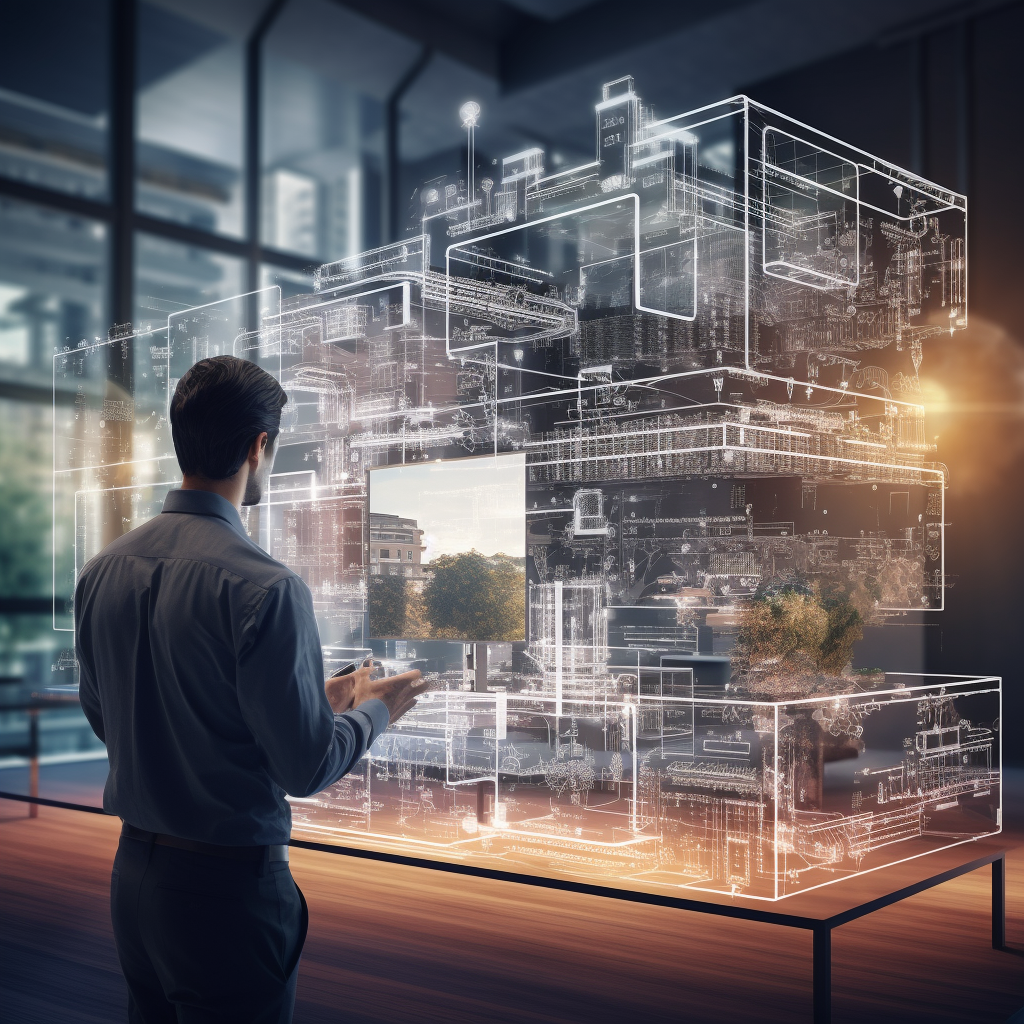
AI is also improving collaboration and communication within architectural projects. AI-driven Virtual Reality (VR) and Augmented Reality (AR) technologies provide immersive visualizations, allowing clients and stakeholders to experience and provide feedback on designs before construction begins⁵. These technologies integrate data from various sources, facilitating better communication and decision-making throughout the project lifecycle.
Predictive Maintenance and Smart Buildings
AI is playing a crucial role in the development of smart buildings. By integrating AI with Internet of Things (IoT) devices, buildings can monitor and manage their own systems, such as HVAC, lighting, and security. Predictive maintenance algorithms analyze data from these systems to predict potential failures and schedule maintenance proactively, reducing downtime and operational costs.
Sustainable Architecture
Sustainability is a major focus in modern architecture, and AI is contributing significantly to this goal. AI algorithms can analyze environmental data to optimize building designs for energy efficiency and minimal environmental impact. For example, AI can simulate various design scenarios to determine the most sustainable materials and construction methods¹. Additionally, AI can help in the design of green buildings that utilize renewable energy sources and have a lower carbon footprint.
Ethical Considerations and Challenges
While AI offers numerous benefits, it also raises ethical considerations and challenges. The automation of design processes may lead to job displacement for some professionals. Moreover, the reliance on AI-generated designs could result in a loss of human creativity and uniqueness in architectural projects. It is essential for the industry to address these challenges by ensuring that AI complements rather than replaces human expertise.
Future Trends
The future of AI in architecture looks promising, with several emerging trends set to shape the industry. Digital twin technologies, which create virtual replicas of physical buildings, are becoming more prevalent. These digital twins allow for real-time monitoring and management of building performance². Additionally, advancements in AI are expected to enhance the capabilities of Building Information Modeling (BIM), making it more efficient and integrated with other technologies.
Conclusion
AI is undoubtedly transforming the field of architecture, offering innovative solutions to traditional challenges and paving the way for more efficient, sustainable, and collaborative design processes. As AI technology continues to evolve, it will be crucial for architects and designers to embrace these advancements while addressing the ethical and practical challenges they present. By doing so, the architectural industry can harness the full potential of AI to create smarter, more sustainable built environments.
Source:
(1) The Impact of AI Tools on Architecture in 2024 (and Beyond). https://www.archdaily.com/1009545/the-impact-of-ai-tools-on-architecture-in-2024-and-beyond.
(2) Artificial Intelligent Architecture: New Paradigms in Architectural .... https://www.archdaily.com/1006953/artificial-intelligent-architecture-new-paradigms-in-architectural-practice-and-production.
(3) How AI in architecture is shaping the future of design ... - Autodesk. https://www.autodesk.com/design-make/articles/ai-in-architecture.
(4) RIBA Artificial Intelligence Report 2024 - Royal Institute of British .... https://www.architecture.com/knowledge-and-resources/resources-landing-page/riba-ai-report-2024.
(5) AI in architecture and engineering from misconceptions to ... - Springer. https://link.springer.com/article/10.1007/s44223-023-00046-9.
دیدگاهها
هیچ نظری هنوز ثبت نشده است.